
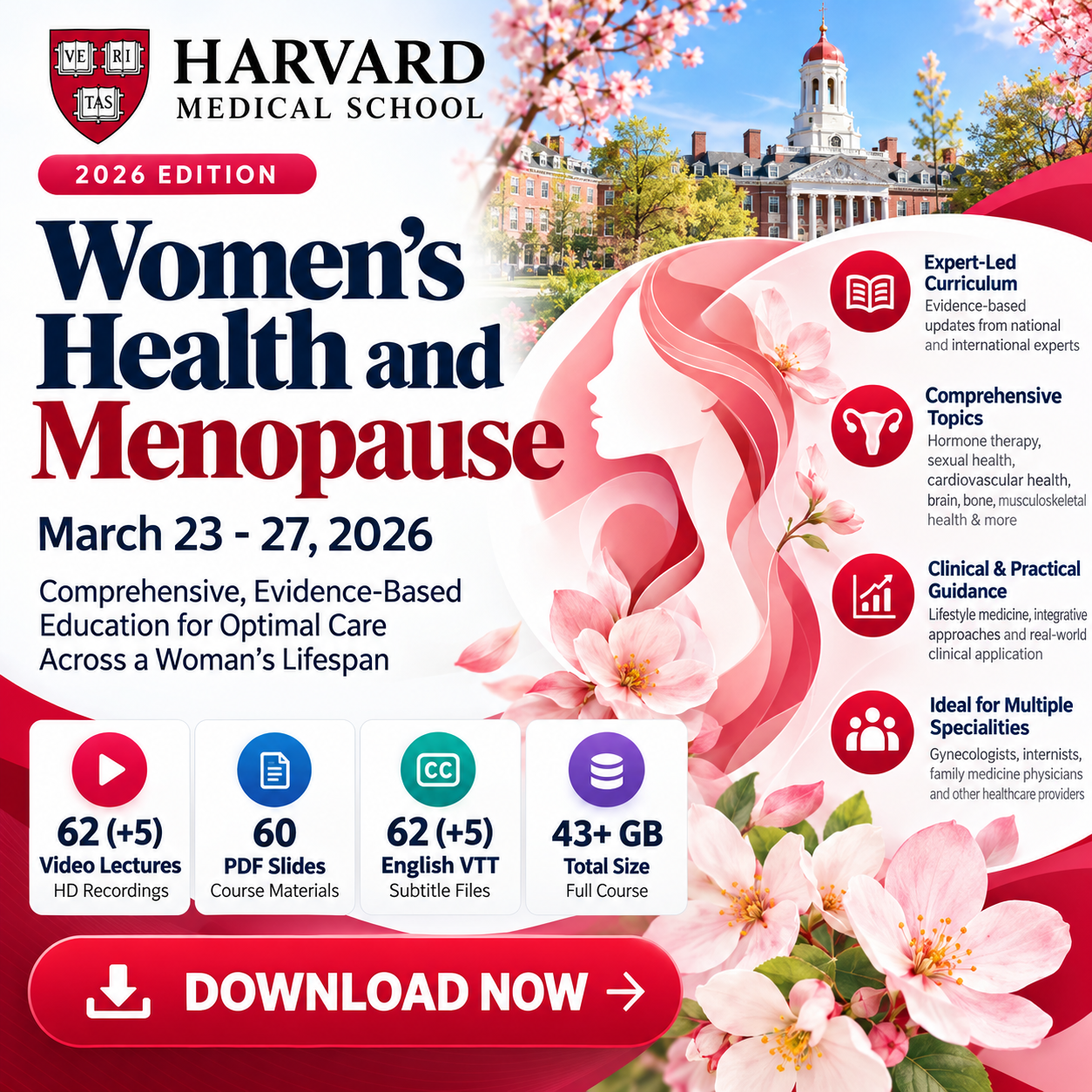


Harvard Women’s Health and Menopause (WHAM) 2026 – Complete Course Videos, PDF Slides & English Subtitles
2026 Edition | March 23–27, 2026 | Comprehensive 5-Day Women’s Health & Menopause Course | Recorded Video Lectures + PDF Materials + English VTT Subtitles
Course Overview
The Harvard Women’s Health and Menopause (WHAM) 2026 is an extensive, evidence-based medical education program designed to advance clinical expertise in perimenopause, menopause management, menopausal hormone therapy, and comprehensive women’s healthcare throughout midlife and beyond.
Held from March 23–27, 2026, this five-day educational program brings together distinguished faculty from Harvard Medical School, affiliated teaching hospitals, and nationally and internationally recognized experts in women’s health.
The course offers a multidisciplinary approach to the hormonal, cardiovascular, metabolic, neurological, musculoskeletal, psychological, and sexual health challenges experienced by women during the menopausal transition.
Through expert-led lectures, evidence-based clinical updates, practical case discussions, and advanced therapeutic insights, participants explore the latest developments in menopausal medicine and individualized patient care.
The 2026 curriculum includes expanded coverage of integrative medicine, musculoskeletal syndrome of menopause, hormone therapy considerations in breast cancer survivors, women’s sexual health, cardiometabolic risk, and emerging approaches to menopause management.
Designed for gynecologists, internists, family medicine physicians, and other healthcare professionals, WHAM 2026 provides a comprehensive clinical foundation for improving diagnostic reasoning, treatment selection, and long-term women’s health outcomes.
What’s Included in This Course?
This digital course collection includes recorded educational presentations and accompanying learning resources from the 2026 program.
- 62 + 5 Video Lectures: A comprehensive collection of recorded presentations, clinical discussions, and supplementary educational sessions.
- 62 + 5 English VTT Subtitle Files: English subtitles accompanying the video lectures for easier comprehension and review.
- 60 PDF Course Materials: Educational slide presentations, clinical references, and supplementary learning documents.
- Five-Day Educational Program: Comprehensive instruction covering menopause medicine, hormonal therapies, and women’s health.
- Clinical Case Discussions: Practical approaches to complex menopausal symptoms and individualized treatment decisions.
- Digital Learning Format: Review the course materials at your own pace.
Course Details
| Feature | Information |
|---|---|
| Course Title | Women’s Health and Menopause (WHAM) 2026 |
| Institution | Harvard Medical School |
| Course Dates | March 23–27, 2026 |
| Duration | 5 Days |
| Video Lectures | 62 + 5 Additional Videos |
| English Subtitles | 62 + 5 VTT Files |
| PDF Materials | 60 PDFs |
| File Size | Approximately 43+ GB (final size to be confirmed) |
| Format | Recorded Videos + PDFs + English Subtitles |
| Specialty | Gynecology, Internal Medicine, Family Medicine, Women’s Health |
| Access | Digital Course Materials |
Key Educational Highlights
1. Perimenopause and Menopause Management
Develop a deeper understanding of the hormonal, physiological, and clinical changes occurring throughout the menopausal transition.
Topics include:
- The science of perimenopause and menopause
- Hormonal changes throughout a woman’s lifespan
- Management of vasomotor and menopausal symptoms
- Primary ovarian insufficiency
- Mood disturbances, anxiety, and cognitive symptoms
- Complex cases in menopause management
- Individualized therapeutic approaches
2. Menopausal Hormone Therapy: Evidence and Clinical Practice
Explore current evidence, clinical guidelines, and practical prescribing considerations for menopausal hormone therapy (MHT).
Key areas include:
- Menopausal hormone therapy guidelines and evidence in 2026
- Estrogen and progesterone treatment strategies
- Testosterone therapy in selected clinical situations
- Safety considerations and potential treatment risks
- Hormonal and nonhormonal treatment options
- Hormone therapy in patients with complex medical histories
- Shared decision-making and individualized prescribing
3. Cardiovascular, Metabolic, and Bone Health
Understand the relationship between hormonal changes and long-term cardiometabolic and musculoskeletal health.
Featured subjects include:
- Cardiovascular disease in women
- Cardiometabolic changes during menopause
- Weight management and obesity treatment
- Osteoporosis prevention and treatment
- Estrogen and bone health
- Musculoskeletal syndrome of menopause
- Rheumatologic and autoimmune conditions
- Osteoarthritis and physical function in midlife
4. Brain Health, Mental Health, and Cognitive Function
Examine the effects of reproductive aging and hormonal changes on neurological and psychological health.
Topics include:
- Estradiol and the aging brain
- Cognitive changes and brain fog
- Depression and anxiety during menopause
- ADHD in midlife women
- Migraines and hormonal fluctuations
- Brain-gut interactions
- Trauma-informed women’s healthcare
- Lifestyle strategies supporting mental well-being
5. Women’s Sexual and Genitourinary Health
Gain practical insights into diagnosing and managing sexual and genitourinary concerns affecting women during midlife.
Coverage includes:
- Genitourinary syndrome of menopause
- Sexual pain and dyspareunia
- Libido and arousal disorders
- Testosterone use in clinical practice
- Pelvic floor physical therapy
- Urinary incontinence and pelvic discomfort
- Vulvar disorders
- Counseling and multidisciplinary sexual healthcare
6. Breast Cancer, Oncology, and Menopause
Explore the complexities of menopause management in women with a history of cancer or an elevated oncologic risk.
Important topics include:
- Breast cancer updates in 2026
- Menopause management in breast cancer survivors
- Hormones and gynecologic malignancies
- Hormonal considerations in patients with breast cancer
- Young breast cancer survivors and premature menopause
- Symptom management when systemic hormone therapy is unsuitable
- Individualized risk assessment and survivorship care
7. Integrative Medicine, Nutrition, and Lifestyle
Review evidence-based approaches to improving women’s physical and mental health through lifestyle and integrative medicine.
Topics include:
- Nutrition and culinary medicine
- Exercise and physical fitness
- Sleep optimization and stress management
- Mind-body approaches to menopause
- Dietary supplements for vasomotor symptoms
- Functional medicine testing
- The gut microbiome and women’s health
- Evidence and limitations of integrative therapies
Learning Objectives
Upon reviewing the course, participants should be better prepared to:
- Understand hormonal transitions: Recognize the physiological and clinical changes associated with reproductive aging, perimenopause, and menopause.
- Improve clinical decision-making: Apply evidence-based approaches to evaluating and managing menopausal symptoms.
- Evaluate hormone therapies: Discuss the indications, benefits, risks, and limitations of estrogen, progesterone, and testosterone treatments.
- Manage complex clinical cases: Address menopausal concerns in patients with cardiovascular, metabolic, neurological, musculoskeletal, and oncologic conditions.
- Support sexual health: Recognize and manage common sexual and genitourinary disorders affecting midlife women.
- Promote preventive healthcare: Incorporate lifestyle medicine, nutrition, exercise, and preventive strategies into clinical practice.
- Interpret emerging evidence: Critically evaluate contemporary research and evolving therapeutic approaches in menopause medicine.
- Strengthen comprehensive women’s healthcare: Develop individualized, multidisciplinary strategies for improving health and quality of life during midlife and beyond.
Comprehensive Course Topics
The WHAM 2026 curriculum includes a broad range of clinical lectures and specialty-focused discussions.
Menopause and Hormonal Medicine
- The Overwhelming Importance of Women’s Health & Menopause
- The Science of Perimenopause & Menopause
- Menopausal Hormone Therapy: 2026 Evidence and Guidelines
- Prescribing Menopausal Hormone Therapy: Getting It Right
- Management of Perimenopausal Symptoms
- Complex Cases in Menopause Management
- Primary Ovarian Insufficiency
- Considerations for MHT in Endometriosis
Cardiovascular, Metabolic, and Musculoskeletal Health
- Thrombosis in Women and the Effect of Hormones
- Hormones for Bone Health: Preventing Osteoporosis
- The Treatment of Osteoporosis
- Weight Management in Perimenopausal and Menopausal Women
- Cardiometabolic Changes in the Menopausal Transition
- Cardiovascular Disease in Women: Sex-Based Differences
- Musculoskeletal Syndrome of Menopause
- Rheumatology and Osteoarthritis in Midlife
Neurology, Mental Health, and Integrative Medicine
- Estradiol and the Impact of Reproductive Aging on the Brain
- Brain Fog: Expert Panel
- ADHD in Midlife Women
- Premenstrual Symptoms, Mood Swings, and Anxiety
- Mental Health and Menopause: Depression
- Migraines and Hormones
- The HPA Axis: Dysfunction, Testing, and Adaptogens
- Functional Medicine Testing
- A Mind-Body Approach to Menopause
- The Role of the Gut Microbiome in Women’s Health
Sexual Health and Genitourinary Medicine
- Genitourinary Syndrome of Menopause: Optimizing Treatment
- Understanding Sexual Health in Midlife and Beyond
- Pelvic Floor Physical Therapy: Painful Sex and Incontinence
- Navigating Sexual Pain Through the Physical Examination
- Libido, Arousal, and Testosterone in Clinical Practice
- An Approach to Addressing Sexual Problems in Women
- Vulvar Disorders
- Issues in Urology: Incontinence and Pain
Breast Health, Oncology, and Survivorship
- Estrogen Matters: Concerns for Breast and Overall Health
- Breast Cancer Updates in 2026
- Hormones and Gynecologic Malignancies
- Young Breast Cancer: A Menopause and Survivorship Perspective
- Managing Menopause and Breast Cancer
- Menopausal Symptoms in Breast Cancer Patients: Expert Panel
Lifestyle, Preventive Care, and Emerging Topics
- Lifestyle Medicine for Physical and Mental Health
- Culinary Medicine and Nutrition for Menopause
- Dietary Supplements for Vasomotor Symptoms
- Optimizing Health and Fitness in Menopause and Beyond
- Hair Loss Evaluation and Treatment in Women
- Skin Care and Aesthetics for Women
- Trauma-Informed Care in Women’s Health
- LGBTQ+ Care at Midlife
- Artificial Intelligence Implementation in Women’s Healthcare
- Women’s Health 2026: Most Important Updates
Note: An extended HPA-axis Q&A session is listed in the program, but its video and PDF materials were not released.
Who Should Take This Course?
The Harvard Women’s Health and Menopause 2026 course is particularly valuable for healthcare professionals seeking to expand their expertise in menopause management and comprehensive women’s healthcare.
Primary Target Audience
- Gynecologists and Obstetrician-Gynecologists (OB/GYN)
- Internal Medicine Physicians
- Family Medicine Physicians
- Women’s Health Specialists
Additional Healthcare Professionals
- Endocrinologists
- Primary Care Physicians
- Nurse Practitioners (NPs)
- Physician Assistants (PAs)
- Registered Nurses
- Allied Health Professionals
- Women’s Health Researchers
- Medical Residents and Fellows
- Healthcare Educators and Administrators
Why Study Women’s Health and Menopause 2026?
Menopause care extends far beyond the management of hot flashes and hormonal symptoms. It requires an understanding of the interconnected changes affecting cardiovascular health, bone density, metabolic function, cognitive performance, sexual well-being, and long-term quality of life.
WHAM 2026 provides a comprehensive educational experience that integrates current scientific evidence with practical clinical reasoning.
Key benefits of the program include:
- Comprehensive Coverage: Explore menopause medicine and women’s healthcare across multiple clinical specialties.
- Evidence-Based Updates: Review contemporary research, guidelines, and therapeutic considerations relevant to 2026.
- Practical Clinical Education: Learn through focused lectures, case-based discussions, and expert perspectives.
- Multidisciplinary Expertise: Benefit from educational contributions across gynecology, internal medicine, endocrinology, oncology, cardiology, and other specialties.
- Flexible Learning: Access recorded lectures, PDF materials, and English subtitle files for convenient independent study.
- Complex Patient Management: Strengthen clinical understanding of menopause care in women with significant comorbidities.
Course Format and Digital Access
The digital collection contains the recorded lectures and educational resources associated with the five-day WHAM 2026 program.
Included Materials:
- 62 recorded video lectures + 5 additional videos
- 62 English VTT subtitle files + 5 additional subtitle files
- 60 PDF educational documents
- Approximately 43+ GB of digital course content (size pending final confirmation)
The recorded format allows healthcare professionals to revisit important clinical discussions, review complex subjects, and study the educational materials according to their individual schedules.
Advance Your Expertise in Menopause Medicine
The Harvard Women’s Health and Menopause (WHAM) 2026 course offers an extensive educational resource for clinicians committed to delivering comprehensive, evidence-based care for women during perimenopause, menopause, and beyond.
From menopausal hormone therapy and cardiovascular prevention to sexual health, integrative medicine, and breast cancer survivorship, this program addresses essential aspects of modern women’s healthcare.
Access the WHAM 2026 Course Collection — Recorded Video Lectures + PDF Slides + English VTT Subtitles.
Download Full Course


Reviews
There are no reviews yet.